
92) Shoulder Bursitis Physiotherapy: What Helps and What Makes It Worse
Shoulder bursitis can make even simple movements painful — lifting, reaching, sleeping, getting dressed or playing sport can suddenly become a struggle. The good news? With the right physiotherapy, most cases improve quickly. In this blog we’ll explain what causes shoulder bursitis, what actually helps, what makes it worse, and when to get help.
What Is Shoulder Bursitis?
Shoulder bursitis happens when one of the small fluid-filled sacs in the shoulder (called bursae) becomes irritated or inflamed. These bursae act as cushions, reducing friction between tendons, bones and soft tissue when you move your arm.
When the shoulder gets overloaded, irritated or compressed repeatedly, the bursa becomes swollen and painful — especially when you lift your arm overhead or rotate it.
The most common type is subacromial bursitis, which sits under the acromion (the roof of the shoulder). This is what most people are referring to when they say “shoulder bursitis”.

Common Symptoms of Shoulder Bursitis
You may be dealing with shoulder bursitis if you notice:
- Pain lifting your arm overhead
- Pain reaching behind your back (bra strap, back pocket, reaching the seatbelt)
- Pain lying on the affected shoulder
- Sharp or catching pain when lifting
- A dull ache afterwards
- Reduced strength or arm fatigue
- Sometimes swelling or warmth around the shoulder
Many people also describe it as a “pinching” or “jammed” feeling in the front or side of the shoulder.
What Causes Shoulder Bursitis?
There’s usually more than one factor involved. Common causes include:
🔹 Overuse or Repeated Overhead Movement
Sports like tennis, swimming, cricket or throwing can irritate the shoulder. Trades like painting, carpentry or labouring commonly contribute too.
🔹 Muscle Weakness
If the rotator cuff muscles aren’t doing their job properly, the shoulder loses control, allowing the head of the humerus to ride upwards — compressing the bursa.
🔹 Poor Posture
Rounded shoulders and prolonged slouching can narrow the space in the shoulder joint, creating irritation and inflammation.
🔹 Sudden Load Increase
A weekend yard project, starting the gym again, new exercise program, or lifting something heavy can trigger symptoms.
🔹 Age-Related Changes
As we get older, tendons become less elastic and surrounding tissues can stiffen, increasing compression and irritation.

What Makes Shoulder Bursitis Worse?
If you’re dealing with shoulder bursitis, a few things can slow or completely stall your recovery.
❌ Pushing Through Pain
“Working through it” rarely helps. Pain is your shoulder telling you something is overloaded. Ignoring it usually leads to more inflammation.
❌ Repeated Overhead Activity
Gym overhead presses, swimming, painting, throwing and heavy lifting above shoulder height tend to aggravate things.
❌ Sleeping on the Painful Shoulder
This compresses the irritated bursa and often leads to waking with throbbing pain.
❌ Only Relying on Rest
Rest alone often reduces symptoms temporarily — but when activity restarts, the pain usually returns because the cause hasn’t been addressed.
❌ Weak Rotator Cuff and Scapular Muscles
If the stabilisers don’t control the shoulder properly, the problem keeps coming back.

What Actually Helps Shoulder Bursitis?
This is where physiotherapy really shines. A targeted treatment plan focuses on reducing pain, restoring movement and improving strength and shoulder control.
How Physiotherapy Helps Shoulder Bursitis
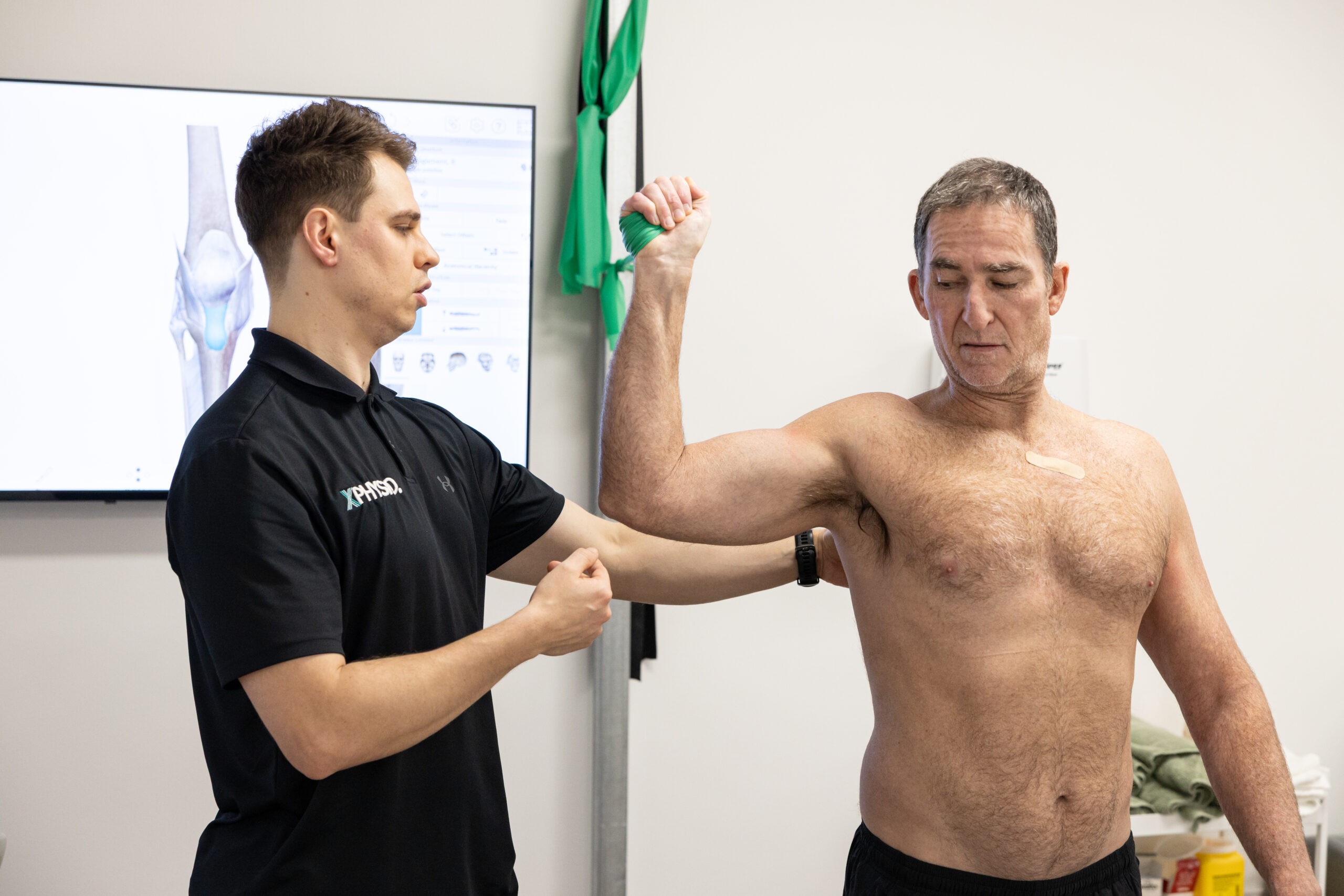
At X-Physio, shoulder bursitis treatment starts with a thorough assessment. We look at:
- Joint movement
- Rotator cuff strength
- Shoulder blade control
- Posture
- Sleeping position
- Work and daily activity demands
- Sport or gym load
Once we understand what’s driving your symptoms, we tailor treatment specifically to you.

Hands-On Treatment to Settle Pain
Early on, the goal is to reduce inflammation and irritation. Treatment may include:
- Soft tissue release
- Joint mobilisation
- Gentle range of motion exercises
- Dry needling (if appropriate)
- Taping or support
- Load management education
Most people feel noticeable relief pretty quickly once inflammation settles and pressure on the bursa decreases.
Correcting the Cause — Not Just the Pain
Once pain is improving, the essential part is fixing the underlying cause. This usually includes:
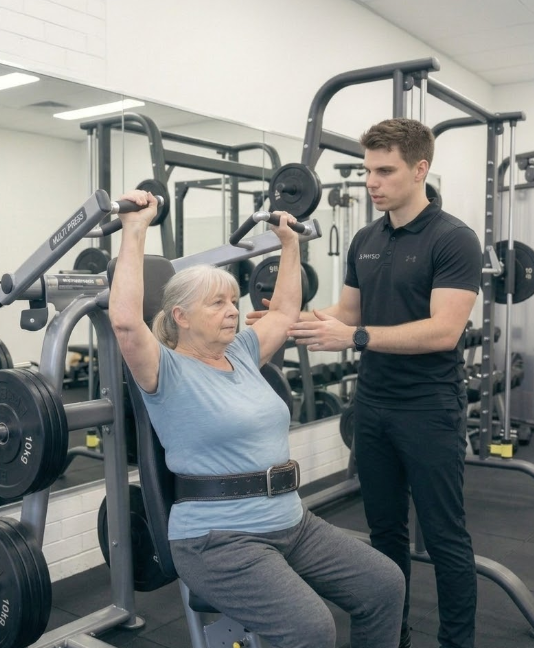
- Rotator cuff strengthening
- Shoulder blade stability exercises
- Postural strengthening
- Improving movement mechanics
- Gradual return to normal lifting, work or sport
This is the step many people skip — which is why shoulder bursitis can become a recurring problem.
Real Patient Success Story – From a Local Surrounding Suburb near Frenchs Forest NSW
Recently we saw a patient who travelled to our Frenchs Forest NSW clinic from a nearby surrounding suburb after struggling with sharp shoulder pain for three months. They couldn’t reach overhead, struggled to sleep on their side, and had stopped gym training completely.
They had been “waiting to see if it would go away” and had only tried resting and pain medication.
Assessment showed:
- Shoulder bursitis with irritation
- Weak rotator cuff and poor shoulder blade control
- Significant aggravation with overhead lifting
We started with hands-on treatment to settle the inflammation, modified their gym exercises, introduced gentle mobility work and then progressed into targeted rotator cuff and postural strengthening.
Within three weeks they were sleeping comfortably and lifting their arm without sharp pain. By eight weeks, they were back to the gym confidently — stronger, pain free and moving better than before.
Do I Need a Cortisone Injection?
Cortisone can reduce inflammation and help with short-term pain relief. However, it does not fix the underlying cause. Physiotherapy remains essential to restore strength and mechanics, otherwise symptoms often return.
Many people improve with physio alone — and we only recommend cortisone when absolutely necessary.
How Long Does Shoulder Bursitis Take to Heal?
Recovery time depends on:
- How long it’s been there
- Severity
- How irritated the bursa is
- Whether you stick to your physio plan
Most people notice improvement within 2–4 weeks, with full recovery often taking anywhere between 6–12 weeks depending on workload and activity demands.
When Should You See a Physio?
Book in if:
- Pain isn’t improving
- You can’t lift your arm without pain
- Sleeping is uncomfortable
- You’ve had pain for more than 2–3 weeks
- You’re avoiding normal activities
Early treatment = faster recovery.
Frequently Asked Questions (FAQs)
Is shoulder bursitis serious?
Not usually, but it can be very painful. The key is managing inflammation early and addressing the cause so it doesn’t become chronic.
How do I know if I have shoulder bursitis or a rotator cuff tear?
Pain pattern, strength testing and movement assessment usually identify the difference. A physio can diagnose clinically in most cases.
Can I still exercise with shoulder bursitis?
Yes — but your training may need modifying. Avoid painful overhead lifting and focus on controlled, pain-free movement.
Does shoulder bursitis need surgery?
Very rarely. Most cases respond extremely well to physiotherapy.
Will it come back?
It can — if weakness or poor movement patterns aren’t addressed. Strengthening and rehab greatly reduce recurrence risk.
References & Further Reading
https://xphysio.com.au/blog
https://www.physio-pedia.com/Subacromial_Bursitis
https://orthoinfo.aaos.org/en/diseases–conditions/subacromial-bursitis
https://www.sportsmedtoday.com/shoulder-bursitis-va-210.htm
Ready to Get On Top of Your Shoulder Pain?
Don’t let shoulder bursitis slow you down. Early treatment gets you moving better, sleeping comfortably and back to the things you love faster.
Give us a call today on 9806 3077, or book online, just CLICK HERE.