
104) Shin Splints vs Stress Fracture: How Physiotherapy Helps Diagnose and Treat Each
Shin pain after running or sport is usually either shin splints vs stress fracture — but they’re treated very differently. One needs load management and strengthening, the other often needs strict protection. In this blog we’ll show you how physio accurately diagnoses the difference and gets you back to training safely — faster.
If you’ve ever tried to “run through” shin pain, you already know the result… it just gets worse.
One of the most common mistakes we see in clinic is people guessing what their shin pain is. They Google, ice it, rest for a few days, then go back — only to flare it again. Sometimes for months.
Here’s the problem:
shin splints vs stress fracture are easy to confuse — but treating them the same can delay recovery by weeks… or even cause a full fracture.
Let’s break it down clearly.
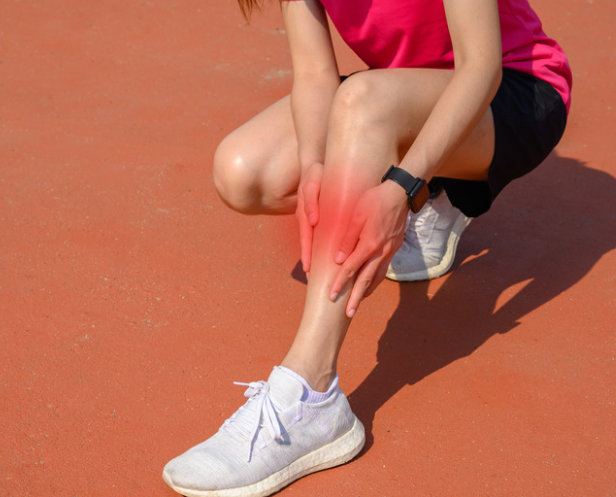
First — What Actually Hurts In Your Shin?
Your shin bone is the tibia. Around it sit muscles, fascia and bone tissue that all react differently to load.
When running or jumping, the tibia bends slightly with every step. Normally, your body repairs that micro-damage overnight.
But if training load increases faster than your body adapts → tissue overload occurs.
That overload becomes either:
| Condition | Tissue Problem |
|---|---|
| Shin Splints | Irritated muscle & bone lining |
| Stress Fracture | Small crack inside bone |
They start from the same cause — training load error — but end very differently.
What Are Shin Splints vs Stress Fracture? (Medial Tibial Stress Syndrome)
Shin splints vs Stress Fracture is very different. Shin splints is an irritation of the bone lining (periosteum) and muscle attachment along the inside of the shin.
Typical Symptoms
- Dull ache along inner shin
- Pain warms up then settles during exercise
- Worse the next morning
- Tender along a wide area (5–10cm strip)
- Both legs often affected
Most runners describe it as:
“tight, sore, annoying — but I can still run”
That’s why people ignore it… and that’s why it progresses.
What’s Happening Physically
Your calf and deep tibial muscles pull repeatedly on the bone.
Instead of the bone breaking — the attachment tissue becomes irritated.
Think of it as shin overload warning stage.

What Is A Stress Fracture?
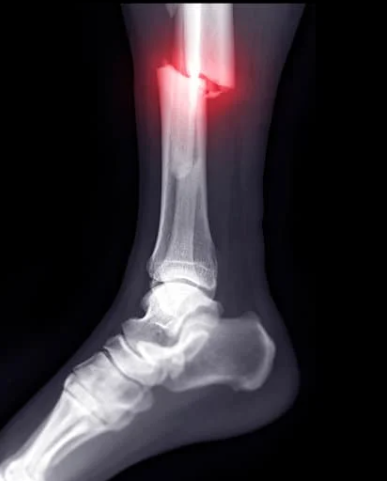
A stress fracture is bone fatigue failure — a small crack caused by repetitive loading exceeding bone repair. Shin Splints vs Stress fracture are often mistaken for one another.
Typical Symptoms
- Sharp, localised pain
- Pain increases during activity
- Pain doesn’t warm up
- Hurts hopping
- Often one exact fingertip spot
- Can ache at rest or night
Patients often say:
“It feels like someone is poking the bone”
This is not a warning stage anymore — it’s structural damage.
The Biggest Diagnostic Clue (You Can Try Now)
Hop Test
If hopping is painful → suspect stress fracture
If hopping is uncomfortable but tolerable → more likely shin splints vs stress fracture
But this is NOT enough alone — because missing a stress fracture is risky.
This is exactly where physiotherapy matters.
Why People Misdiagnose Themselves
Most runners think:
“If I can still run, it’s just shin splints”
Unfortunately… that’s wrong.
We regularly see runners continue training on early stress fractures for 4–6 weeks because the pain wasn’t severe initially.
By the time they come in — recovery takes 12 weeks instead of 4.
How Physiotherapy Diagnoses Shin Splints vs Stress Fracture
At XPhysio in Frenchs Forest, we don’t rely on guesswork.
We combine clinical testing + loading history + physical response patterns.
Step 1 — Load History Analysis
We map:
- Weekly distance changes
- Surface change (road → track)
- Shoe changes
- Hill work
- Speed sessions
- Sport pre-season spikes
Stress fractures nearly always follow a sudden spike.
Step 2 — Palpation Mapping
We physically map pain location:
| Finding | Suggests |
|---|---|
| Broad tenderness | Shin splints |
| Fingertip pain | Stress fracture |
Step 3 — Functional Testing
We test:
- Single leg hop
- Calf endurance
- Tibial torsion stress
- Landing mechanics
Stress fractures fail impact tests early.
Step 4 — Medical Imaging (If Needed)
If fracture suspected → GP referral for imaging.
Important note:
Early X-rays are often negative — so we guide correct scan timing.
Treatment Is Completely Different
This is why correct diagnosis matters.
Shin Splints vs stress fracture Treatment
Goal = reduce irritation + improve load capacity
- Activity modification (not full rest)
- Calf strength rebuilding
- Tibial loading progression
- Running retraining
- Foot strike & cadence changes
- Gradual return to running
Recovery: 2–6 weeks
You usually keep training in some capacity.
Stress Fracture Treatment
Goal = protect bone healing
- Impact unloading
- Cross training only
- Staged bone loading program
- Strength rebuild
- Controlled return to impact
Recovery: 6–12+ weeks
Running through it delays healing dramatically.
Real Patient Example
A 29-year-old runner came to us from Dee Why after 8 weeks of persistent shin pain. We had to figure out if it was shin splints vs stress fracture.
They’d been told it was shin splints and kept running 3–4 times per week.
During assessment:
- Fingertip pain over tibia
- Pain hopping
- Increasing night ache
We suspected stress fracture and arranged imaging — confirmed early tibial stress fracture.
Instead of needing 3 months off, we:
- Immediately unloaded impact
- Maintained cardio via cycling
- Introduced staged bone loading
- Gradually reintroduced running at week 5
They completed a 10km event pain-free 10 weeks later.
If they kept running another month → likely full fracture.
Why These Injuries Keep Coming Back
The real issue is rarely just the shin.
Common root causes:
- Weak calf endurance
- Poor shock absorption
- Sudden training spikes
- Low cadence running
- Hip control deficits
- Inadequate recovery
If you only rest — it returns.
How Physiotherapy Prevents Recurrence
Your rehab shouldn’t end when pain stops.
We build:
- Load tolerance
- Impact capacity
- Running efficiency
- Training planning skills
Most runners relapse because they never improved tissue capacity — only waited for pain to settle.
To learn more about this injury, CLICK HERE for our other blog on this topic.

The Return To Running Plan (Simplified)
Phase 1 — Calm Tissue
Bike / swim / gym only
Phase 2 — Load The Bone
Walking impact drills
Phase 3 — Reintroduce Running
Walk-run intervals
Phase 4 — Build Distance
Volume before speed
Phase 5 — Performance
Speed & hills
Skipping phases = relapse.
When To Seek Physio Immediately
Book ASAP if:
- Pain worsening week to week
- Pain in one exact spot
- Pain hopping
- Pain at rest
- Pain lasting >10 days
Early diagnosis shortens recovery massively.
FAQs
How do I know if I have shin splints or a stress fracture?
Shin splints usually feel like a broad ache that warms up with activity. Stress fractures feel sharp, localised and worsen during impact or hopping.
Can I run with shin splints?
Often yes — but load must be modified and rehab started early to prevent progression into a stress fracture.
Can shin splints turn into a stress fracture?
Yes. They’re part of the same overload spectrum. Ignoring shin splints is the most common cause of tibial stress fractures.
Do stress fractures always need a boot?
Not always. Early detection often avoids immobilisation and allows controlled loading rehab.
How long does recovery take?
Shin splints: 2–6 weeks
Stress fracture: 6–12+ weeks depending on severity
References
- https://www.sportsmedaustralia.com.au
- https://www.ais.gov.au/health-wellbeing/injury
- https://www.mayoclinic.org
- https://www.nhs.uk/conditions/stress-fractures/
- https://bjsm.bmj.com
Give us a call today on 9806 3077, or book online, just CLICK HERE with the hyperlink: https://x-physio.au4.cliniko.com/bookings#service