
114) Recurrent Hamstring Cramps Treatment in Frenchs Forest | Physio Guide to Fast Recovery
Recurrent hamstring cramps can be frustrating, unpredictable, and often misunderstood. If your hamstrings keep tightening up during runs, workouts, or even at night, there’s usually more going on than just “tight muscles.” In this guide, we break down the real causes—and how physiotherapy can fix it properly.
At our physiotherapy clinic in Frenchs Forest NSW, recurrent hamstring cramps are something we treat every week. Whether you’re a runner hitting the trails, a gym-goer lifting heavy, or someone just trying to stay active, this issue is incredibly common.
We see it across all age groups—from weekend warriors to office workers who sit all day and then train hard. The good news? Once you understand the cause, it’s very treatable.
What Are Recurrent Hamstring Cramps?
Recurrent hamstring cramps are repeated episodes of sudden, involuntary tightening in the muscles at the back of your thigh. These cramps can happen during activity, after exercise, or even at rest (like during sleep).
Unlike a one-off cramp, recurrent cramps usually point to an underlying issue—whether that’s muscle imbalance, fatigue, or irritation of the nervous system. Most patients are surprised that it’s not just about hydration or stretching.

Symptoms of Recurrent Hamstring Cramps
- Sudden tightness or “grabbing” in the back of the thigh
- Cramping during or after exercise
- Night cramps that wake you up
- Ongoing feeling of tight hamstrings despite stretching
- Reduced performance or fear of pushing hard
Causes of Recurrent Hamstring Cramps
General Causes
- Overuse – too much load without enough recovery
- Sudden increases in training or activity
- Muscle weakness (especially glutes and hamstrings)
- Fatigue from repeated or intense exercise
What We See in the Clinic
In our experience, the most common cause we see isn’t just “tight hamstrings”—it’s a combination of muscle imbalance and nerve irritation.
Most people come in thinking they just need to stretch more, but the cramping keeps coming back. That’s because the hamstring is often overworking due to weak glutes or poor movement patterns.
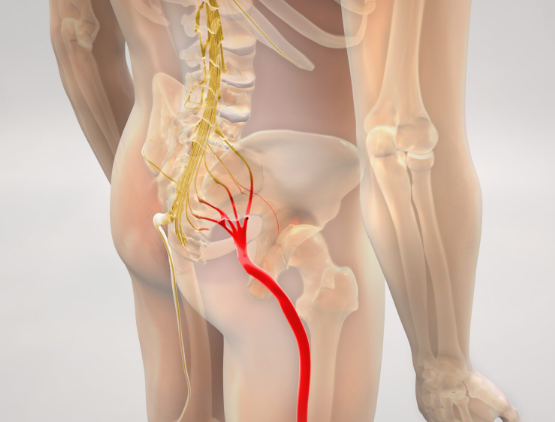
We also often see subtle irritation of the sciatic nerve. This can make the hamstring more sensitive and prone to cramping—even if the muscle itself is strong.
A mistake we see all the time is people relying only on magnesium, hydration, or stretching. While these can help, they rarely fix the root cause.
Most patients are surprised that it’s not just a muscle problem—it’s often a coordination issue between your nervous system and muscles, especially under fatigue.
Can You Keep Training?
Short answer: it depends.
In most cases, you can keep training—but you need to modify things:
- Reduce intensity or volume temporarily
- Avoid pushing into cramp territory
- Focus on movement quality
In our experience, completely stopping activity isn’t usually necessary—and can actually slow recovery. The key is getting the right guidance so you don’t keep aggravating the issue.
If this sounds like what you’re dealing with, getting on top of it early with physio can make a huge difference.
How Physio Treats Recurrent Hamstring Cramps
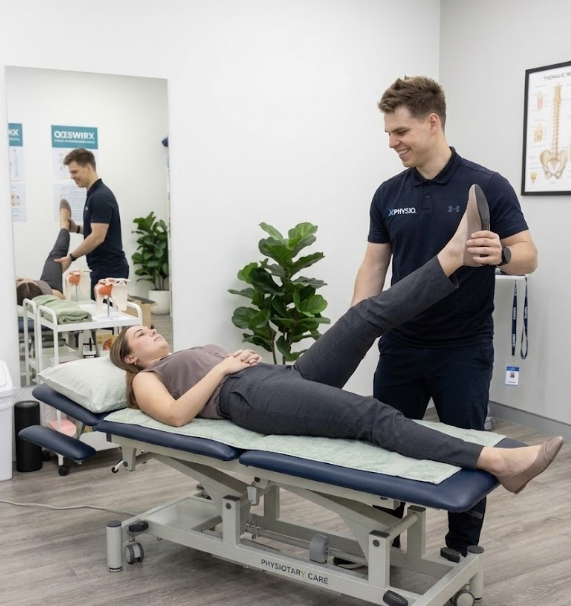
1. Assessment
We look beyond just the hamstring:
- Strength testing (glutes, hamstrings, calves)
- Movement patterns (running, squatting, bending)
- Neural tension (checking for nerve involvement)
This is where we often uncover the real cause.
2. Pain Reduction
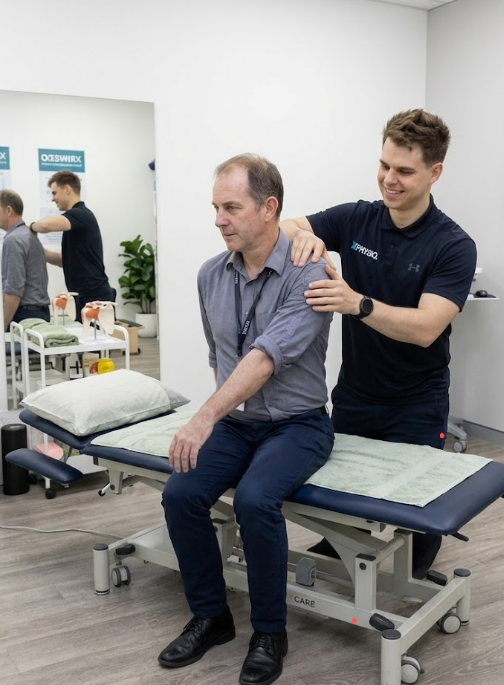
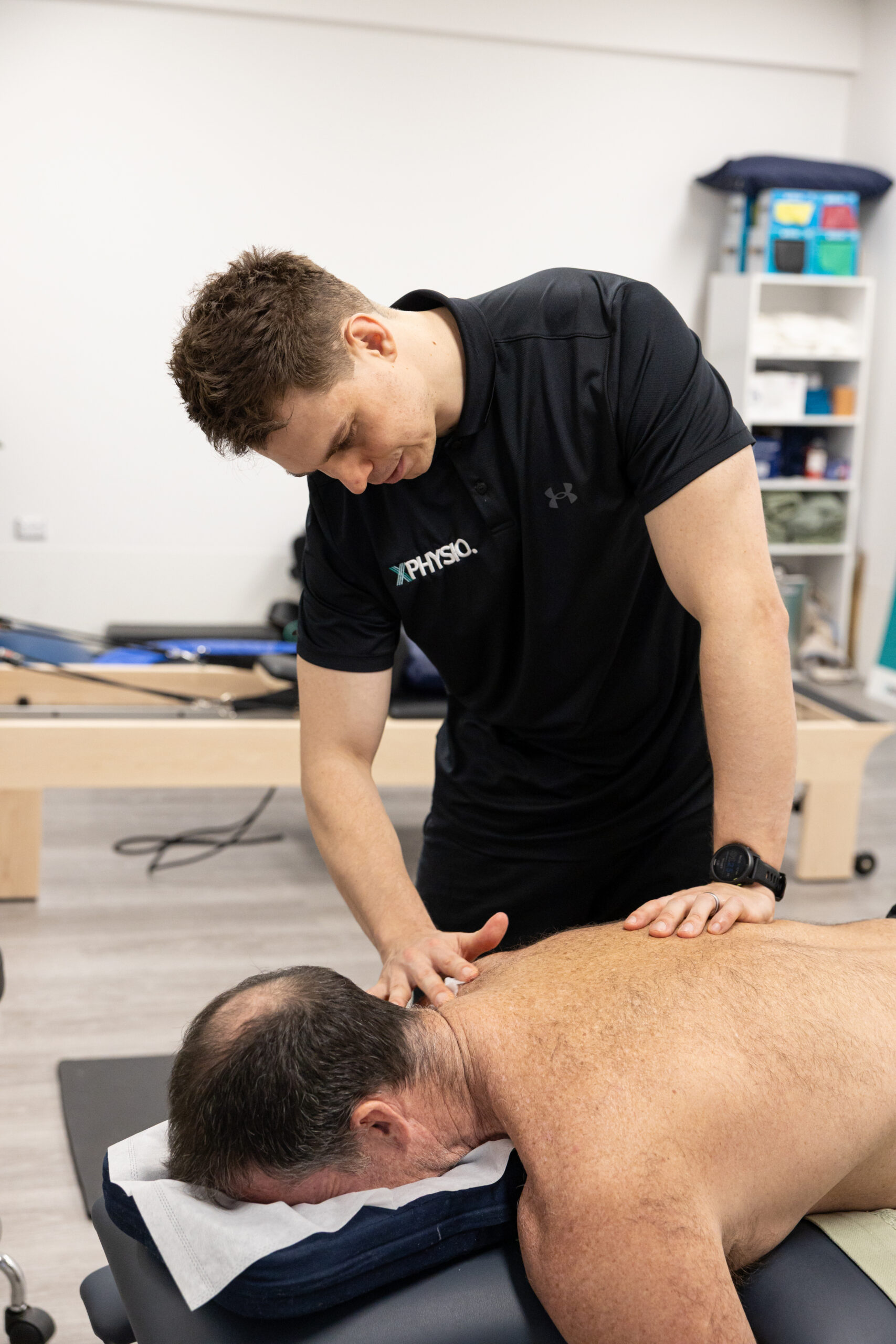
- Hands-on treatment to reduce muscle tension
- Gentle mobility work
- Techniques to calm nerve sensitivity
This helps settle symptoms quickly so you can move better.
3. Strength & Rehab
This is the most important stage.
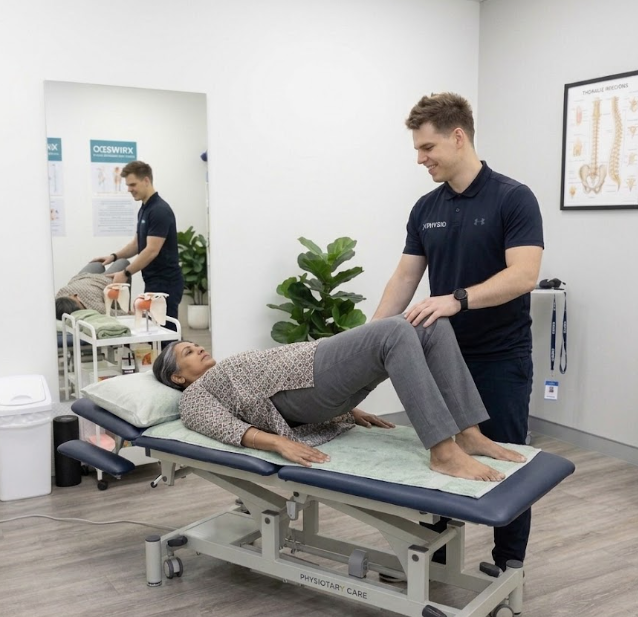
- Targeted hamstring strengthening (not just stretching)
- Glute activation and control
- Core and pelvic stability work
- Gradual exposure to load
In our experience, this is where long-term results happen.
4. Return to Activity
- Gradual return to running, sport, or gym
- Load progression planning
- Technique correction
We make sure you don’t just feel better—you stay better.
Why Rest Alone Doesn’t Fix Hamstring Cramps
Rest might reduce symptoms short-term, but it doesn’t fix:
- Muscle weakness
- Poor movement patterns
- Nerve sensitivity
That’s why cramps often come straight back when you return to activity. Real recovery comes from fixing the underlying cause—not just waiting it out.
Real Patient Example
We recently treated a runner from Dee Why who came into our Frenchs Forest clinic with ongoing hamstring cramps during long runs.
He’d tried stretching daily and taking magnesium, but nothing changed.
After assessing him, we found:
- Weak glutes causing overloading of the hamstrings
- Increased neural tension through the sciatic nerve
We worked on:
- Glute strength and control
- Hamstring loading exercises
- Nerve mobility work
Within 4–6 weeks, his cramping had completely resolved, and he was back to running without fear.
Common Mistakes
- Stretching too much – feels good short-term but doesn’t fix the cause
- Ignoring strength work – weak muscles cramp more easily
- Training through severe cramps – often worsens the issue
- Relying only on supplements – doesn’t address biomechanics
- Missing nerve involvement – a key factor we often see overlooked
Recovery Time for Recurrent Hamstring Cramps
Recovery depends on the cause and how long it’s been going on.
- Mild cases: 2–4 weeks
- Moderate: 4–8 weeks
- Long-standing issues: 8–12+ weeks
In our experience, patients who address the root cause early recover much faster.
Physio in Frenchs Forest for Recurrent Hamstring Cramps
If you’re dealing with recurrent hamstring cramps in Frenchs Forest or nearby areas, our physios can help you recover faster and prevent it from coming back.
Learn more about our services HERE
Explore more injury advice HERE
Give us a call today on 9806 3077, or book online, just CLICK HERE:
FAQs
Why do my hamstrings cramp even when I stretch regularly?
Stretching doesn’t address strength deficits or nerve irritation, which are two of the most common causes.
Are hamstring cramps a sign of injury?
Not always, but recurrent cramps often indicate an underlying issue that should be assessed.
Does magnesium help with hamstring cramps?
It can help in some cases, but in our experience, it rarely fixes the issue on its own.
Can nerve irritation really cause cramps?
Yes—irritation of the sciatic nerve can increase muscle sensitivity and trigger cramping.
Should I stop running if I get hamstring cramps?
Not necessarily. Modifying your training while addressing the cause is usually the best approach.
References
- Australian Physiotherapy Association
https://australian.physio - Sports Medicine Australia
https://sma.org.au - NSW Health
https://www.health.nsw.gov.au - Journal of Orthopaedic & Sports Physical Therapy
https://www.jospt.org - Brukner & Khan’s Clinical Sports Medicine
https://www.mhmedical.com/book.aspx?bookid=2926