
115) Reactive vs Degenerative Tendinopathy Treatment in Frenchs Forest | Physio Guide to Fast Recovery
Reactive vs Degenerative Tendinopathy pain that keeps coming back is usually more than just “overuse.” Understanding the difference between reactive and degenerative tendinopathy is the key to fixing it properly. In this guide, we break it down simply—and show how the right physio approach can stop the cycle for good.
At our physiotherapy clinic in Frenchs Forest, NSW, we regularly treat tendon injuries in runners, gym-goers, tradies, and office workers alike. Whether it’s an Achilles flare-up, patellar tendon pain, or shoulder tendinopathy, this pattern of recurring pain is something we see every single week.
Most patients come in frustrated—they’ve rested, stretched, and even tried strengthening, but the pain keeps returning. In our experience, that’s usually because they haven’t been told whether their tendon is in a reactive or degenerative stage.
If you’re looking for expert guidance, you can learn more about our approach to physio in Frenchs Forest here:
https://www.xphysio.com.au

What is Reactive vs Degenerative Tendinopathy?
Tendinopathy is a broad term used to describe tendon pain and dysfunction—but not all tendon injuries are the same.
Reactive tendinopathy is the early stage. It happens when a tendon becomes irritated from a sudden increase in load (like ramping up running or gym training too quickly). The tendon thickens slightly and becomes painful but is still structurally healthy.
Degenerative tendinopathy is more chronic. Over time, repeated overload leads to breakdown in the tendon structure. The tissue becomes weaker, less organised, and more prone to flare-ups.
Most patients are surprised that long-term tendon pain often involves a mix of both—this is why it keeps coming back.
Symptoms
- Pain during or after activity
- Morning stiffness or a “tight” feeling in the tendon
- Pain that warms up, then worsens later
- Localised tenderness when pressing the tendon
- Reduced strength or performance
What Causes Tendinopathy?
General Causes
- Sudden increase in training load
- Repetitive overuse
- Muscle weakness or imbalance
- Poor recovery or sleep
- Biomechanical factors
What We See in the Clinic
In our experience, the most common cause we see is poor load management—not just overuse.
A mistake we often see is patients doing too much rest or jumping into strengthening too quickly—both can make things worse.
Most people think tendon pain is purely inflammatory and needs rest. But actually, tendons respond best to gradual, progressive loading—not complete rest.
We also often find that the pain isn’t just at the tendon. There are usually contributing factors like weak calves, poor hip control, or stiffness elsewhere that keep driving the issue.

Can You Keep Training?
Short answer: it depends—but usually yes, with modification.
Completely stopping activity isn’t always the best solution. In fact, too much rest can make tendons weaker and more sensitive.
Instead, we guide patients to:
- Reduce load (not eliminate it)
- Modify exercises
- Stay within a tolerable pain range
This is where physio becomes crucial—because guessing this yourself often leads to setbacks.
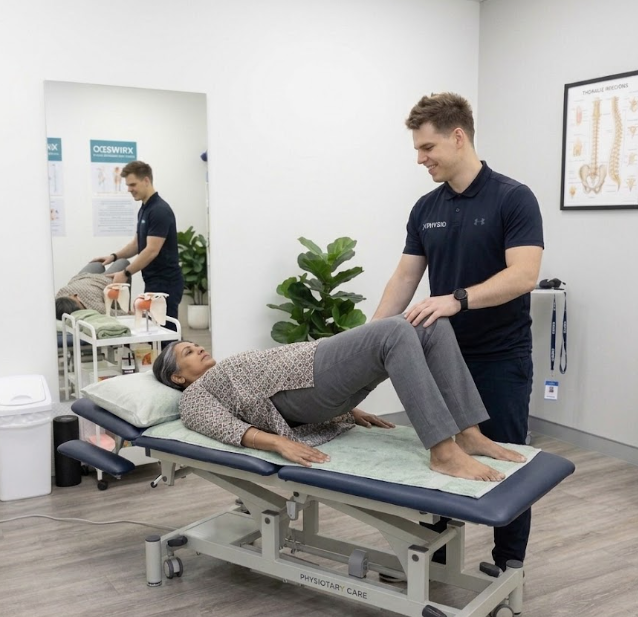
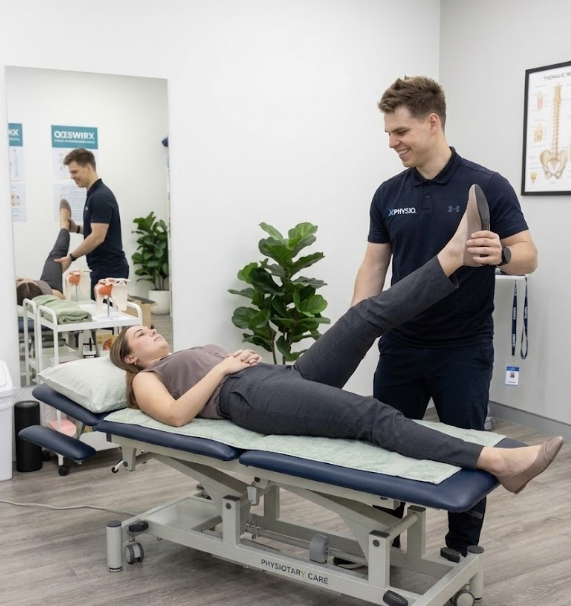
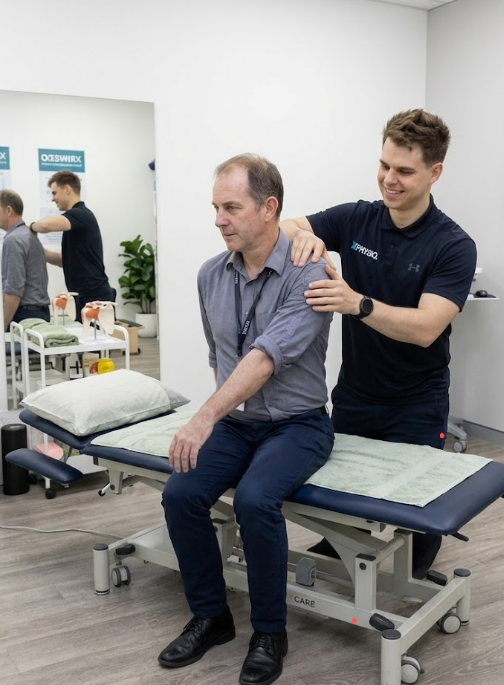
How Physio Treats Tendinopathy
Assessment
We identify whether your tendon is reactive, degenerative, or a mix of both. We also assess strength, movement patterns, and load tolerance.
Pain Reduction
For reactive tendons, we calm things down by adjusting load and using targeted isometric exercises.
Strength & Rehab
This is where most blogs oversimplify things.
We progressively load the tendon using:
- Isometric exercises (early stage)
- Slow heavy resistance training
- Plyometrics (later stage)
In our experience, this phase is where long-term success is built.

Return to Activity
We gradually reintroduce sport or gym work with a structured plan—so you don’t fall back into the same cycle.
If this sounds like what you’re dealing with, getting on top of it early with physio can make a huge difference.
You can also read more about running injury treatment here:
https://xphysio.com.au/10-running-tips-from-a-physio-to-avoid-injury/
Why Rest Alone Doesn’t Fix Tendon Pain
Many people are told to just rest until pain settles. The problem? Tendons don’t heal well with rest alone.
Without proper loading:
- Tendons become weaker
- Pain returns quickly when you restart activity
- The cycle repeats
We often see patients who’ve had months of rest—but still can’t run, squat, or train without pain.
The key is the right load at the right time—not no load.
Real Patient Example
We recently treated a runner from Dee Why who came into our Frenchs Forest clinic with ongoing Achilles pain.
He’d been dealing with it for over 8 months—resting, stretching, and trying random exercises he found online. Every time he returned to running, the pain flared up again.
On assessment, we found a mix of degenerative tendon changes with a reactive flare-up. His calf strength was also significantly reduced.
We:
- Modified his running load
- Introduced isometric calf work initially
- Progressed into heavy strength training
- Built him back into running gradually
Within 8 weeks, he was back running consistently—and more importantly, without flare-ups.
Common Mistakes
- Resting too much – weakens the tendon further
- Jumping into heavy exercises too early – aggravates reactive tendons
- Ignoring pain signals – pushing through often worsens things
- Copying generic rehab programs – not tailored to your stage
- Not addressing contributing factors – like strength or movement issues
Recovery Time
Recovery varies depending on the stage:
- Reactive tendinopathy: 2–6 weeks with proper management
- Degenerative tendinopathy: 3–6+ months
Most patients are surprised that tendon rehab takes time—but when done properly, results are long-lasting.
If you’re dealing with reactive vs degenerative tendinopathy in Frenchs Forest or nearby areas, our physios can help you recover faster and prevent it from coming back.
Give us a call today on 9806 3077, or book online here:
https://x-physio.au4.cliniko.com/bookings#service
FAQs
What is the difference between reactive and degenerative tendinopathy?
Reactive tendinopathy is an early-stage overload response, while degenerative tendinopathy involves longer-term structural breakdown.
Can tendinopathy heal on its own?
It can improve, but without proper rehab, it often returns.
Should I stop exercising with tendon pain?
Not completely. Most cases benefit from modified activity rather than full rest.
How do I know what stage my tendon injury is?
A proper physio assessment is the best way to determine this.
What is the best treatment for tendon pain?
Progressive loading exercises tailored to your specific condition and stage.
References
Australian Institute of Sport – Tendinopathy Guidelines
https://www.ais.gov.au
Cook JL, Purdam CR. Is tendon pathology a continuum? A pathology model to explain the clinical presentation of load-induced tendinopathy
https://bjsm.bmj.com
Sports Medicine Australia – Tendon Injuries
https://sma.org.au
Physiopedia – Tendinopathy
https://www.physio-pedia.com