
88) How Much Exercise Should You Really Be Doing Each Week?
Looking to stay fit and healthy? The simple answer is: aim for about 2½ to 5 hours of moderate exercise — or 1¼ to 2½ hours of vigorous exercise — per week, plus some strength work. Stick around and I’ll show you how to make this work for your lifestyle (even if you’re flat out during the week).
Why Weekly Exercise Matters — And What “Enough” Actually Means
When it comes to staying healthy, moving regularly is key. According to the official guidelines from the Australian Government, adults aged 18–64 should aim to be active most days of the week, building up to either:
- 2.5 to 5 hours per week of moderate-intensity activity (like brisk walking, casual cycling, swimming, or gardening), or
- 1.25 to 2.5 hours per week of vigorous-intensity activity (like jogging, fast cycling, aerobics, or sport), or
- A mix of both.
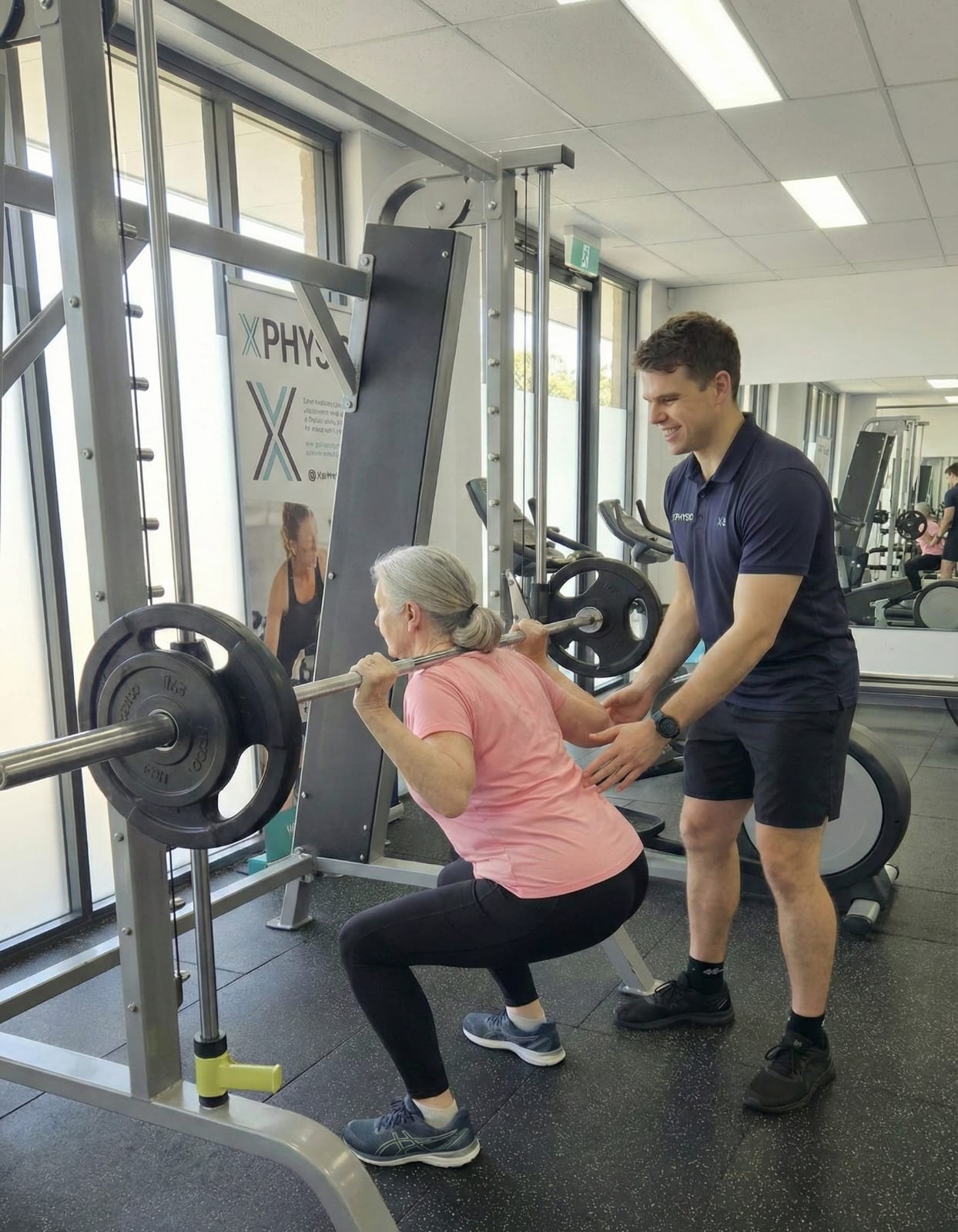
On top of that, you should include muscle-strengthening activities on at least 2 days per week — things like squats, lunges, push-ups, lifting weights or even heavy housework count.
And if you’re mostly sitting during the day — maybe at a desk job — it’s not enough to just “count the gym.” Minimising prolonged sitting and breaking up long periods of inactivity also matters.
Although this is the general guidelines for most people, certain ages and conditions will require more specific exercise instructions. Read more about our Osteoporosis blog to find out more about this condition’s requirements: HERE

What That Looks Like in Real Life
Okay, so 2.5 to 5 hours a week — what does that really look like when you’re juggling work, kids, errands and maybe a bit of Netflix? Here are some realistic “lifestyle-friendly” examples:
| Goal | Example Plan |
|---|---|
| 150 minutes/week moderate (minimum) | 30 min brisk walk × 5 days (e.g. before/after work, walking to shops) |
| 300 minutes/week moderate (upper guideline) | 30 min brisk walk × 5 days + 45–60 min cycling or swimming on weekend |
| 75 min/week vigorous (minimum vigorous) | 25 min jog × 3 days per week |
| Mixed approach | 2 brisk walks (30 min), 2 gym sessions (45 min), 1 weekend swim or hike |
And for muscle strength — maybe throw in a couple of short bodyweight sessions (squats, lunges, push-ups) on two or more days per week.
If you’re currently doing nothing, that’s totally fine — start small. Even a 10-minute walk each day is better than nothing. The key is consistency, not perfection.
Why These Guidelines Matter (Beyond Just “Looking Fit”)
Meeting these targets doesn’t just help you lose weight or tone up. Regular, appropriately dosed exercise:
- supports heart and lung health, reducing risk of heart disease, stroke and high blood pressure Heart Foundation+1
- helps maintain muscle and bone strength, especially important as we get older Health, Disability and Ageing+1
- lifts mood and mental well-being, improves sleep and reduces risk of chronic disease Health, Disability and Ageing+1
- combats the negative effects of too much sitting — which, even if you “exercise,” can still increase risk of metabolic issues if you sit for long periods.
So really — doing the recommended amount isn’t just about looking good. It’s about feeling good, staying strong, and protecting long-term health.

How to Make It Work — In a Busy Life
If you lead a busy life (work, kids, commitments) — and you live in or around suburbs like ours (we’re based near Frenchs Forest, so many of our patients commute from nearby suburbs) — here are some tips to build movement into your week without overwhelming yourself:
- Treat exercise like brushing your teeth: a little bit every day rather than a big “weekend warrior” session.
- Use active transport where possible — walk or cycle to the shops, hop off the bus a stop early, walk the dog.
- Break up long periods of sitting at work — set a timer every hour to stand up, stretch or walk for 2–5 minutes.
- Combine movement with chores — garden, vacuum, mow the lawn — it counts.
- Find something you enjoy — walking, dancing, swimming, social sport — you’re far more likely to stick with it long-term that way.
- Do muscle-strengthening or mobility exercises twice a week — even short sessions of bodyweight exercises count.
Real Results: A Case from Our Clinic
To make this concrete, here’s a recent example from our physiotherapy clinic:
A patient in their mid-40s came in from a nearby suburb (just a 15-minute drive down from Frenchs Forest). They were complaining of recurring lower-back stiffness and general fatigue — they worked in an office, sat all day, got home late, and had little energy for exercise.
We began by prescribing simple, achievable changes: 20-minute brisk walks after work, two short home sessions per week with body-weight exercises (squats, glute bridges, gentle core work), and small mobility breaks during the workday.
Within 6–8 weeks, they reported feeling noticeably better: less back stiffness, more energy, and even sleeping more soundly. By gradually working up to ~150–180 minutes of weekly moderate activity + two strength sessions per week, they hit the recommended activity levels — and felt the health benefit.
This just shows: you don’t need to become a marathon runner to feel the difference. Starting small and building up works — especially when you’re guided and supported.
How to Get Started (or Get Back on Track)
- Do a quick “activity audit”: how much are you currently moving during a typical week?
- If you’re doing nothing (or very little), set a small, achievable goal — e.g. a 10–15 min walk each day.
- Add muscle-strengthening or mobility exercises twice per week — bodyweight exercises at home are perfect.
- Sprinkle in activity throughout your day: stand or walk when you can; use the stairs; walk to shops; get off the bus early.
- Gradually increase time or intensity only when it feels comfortable — consistency is more important than intensity to start.
If you’ve got aches, pains or pre-existing issues — or haven’t exercised in ages — consider chatting to a physiotherapist (like us) to build a plan that’s safe, effective and sustainable.

Bring It All Together — Your Weekly “Movement Plan”
- Aerobic (moderate): ~150–300 minutes a week (start with 150 if you’re new)
- Or Aerobic (vigorous): ~75–150 minutes per week, if you prefer shorter, harder sessions
- Muscle strength & mobility: at least 2 days per week
- Sit less, move more: break up sedentary time during the day
Do that — and you’ll be doing what’s recommended for most Aussie adults.
FAQs
Q: What if I don’t have time for full 30-minute sessions — does short walking still count?
A: Yes — any movement helps. Even short walks, stair climbs or household chores throughout the day add up. Consistency is the main goal.
Q: Can I combine vigorous and moderate activity in the same week?
A: Definitely. The guidelines allow an equivalent combination — e.g. some brisk walking, some jogging — so you get flexibility to suit your schedule and fitness.
Q: Is strength training really necessary if I already walk or run weekly?
A: Yes — strengthening muscles supports joints, posture, mobility, and overall long-term health (especially as we age).
Q: I have a desk job. Is walking only at the weekend enough?
A: Ideally no — regular daily activity is better. Try breaking up sitting time at work, walk during breaks, and aim for smaller doses of activity most days rather than one big burst at the weekend.
Q: What if I’m older than 65 — how much should I exercise?
A: Older adults benefit from at least 30 minutes of moderate activity most days, plus strength/balance exercises — but even small amounts help.
Want a Personalised Plan?
At our clinic in Frenchs Forest we love helping people build realistic, effective movement routines. Send us a message, or give us a call today on 9806 3077 — or book online, just CLICK HERE 👈

References & Further Reading
- Australian Government: Physical activity and exercise guidelines for all Australians Health, Disability and Ageing+1
- NSW Government — Physical activity guidelines for adults NSW Government+1
- Heart Foundation — Getting started with more physical activity Heart Foundation+1