
112) Costochondritis: Chest Pain That Isn’t Heart-Related (And How Physio Helps)
Chest pain is scary—no doubt about it. But not all chest pain is heart-related. Costochondritis is a common, treatable condition involving inflammation of the rib joints. The good news? With the right costochondritis physiotherapy, you can reduce pain, restore movement, and get back to normal life faster.
What Is Costochondritis?
Costochondritis is inflammation of the cartilage where your ribs attach to your breastbone (sternum). These joints—called costochondral joints—play a key role in allowing your chest to expand when you breathe.
When they become irritated or inflamed, you can feel sharp, aching, or pressure-like pain in the chest. It often mimics more serious conditions, which is why it can cause a lot of anxiety.

What Does Costochondritis Feel Like?
Costochondritis pain can vary from person to person, but common symptoms include:
- Sharp or aching pain in the front of the chest
- Pain that worsens with deep breathing, coughing, or sneezing
- Tenderness when pressing on the ribs near the sternum
- Pain that increases with movement (especially twisting or lifting)
- Discomfort that may radiate to the shoulder or upper back
A key feature? The pain is usually reproducible with touch or movement, which helps differentiate it from heart-related chest pain.
If the pain is referring down your arm, please read THIS BLOG instead.
What Causes Costochondritis?
There’s often no single clear cause, but several contributing factors can lead to costochondritis:
1. Repetitive Strain
Activities like heavy lifting, gym training, or repetitive upper body movements can overload the rib joints.
2. Poor Posture
Slouched posture—especially from desk work—can place constant stress on the chest wall.
3. Sudden Increase in Activity
Starting a new workout program or increasing intensity too quickly can trigger symptoms.
4. Trauma or Impact
A fall, sporting collision, or even minor trauma can irritate the costochondral joints.
5. Coughing or Respiratory Illness
Persistent coughing (e.g. after a cold) can strain the rib joints and lead to inflammation.

Why It’s Important to Rule Out Serious Causes
Before assuming it’s costochondritis, it’s critical to rule out more serious conditions like heart or lung issues—especially if you experience:
- Chest tightness or pressure with exertion
- Shortness of breath
- Pain spreading to the arm, jaw, or neck
- Dizziness or nausea
If in doubt, always seek medical attention first. Once serious causes are excluded, costochondritis physiotherapy becomes a highly effective treatment pathway.
How Physiotherapy Helps Costochondritis
Physiotherapy is one of the most effective ways to treat costochondritis because it targets the underlying mechanical and movement-related causes.
Here’s how we approach it:
1. Pain Relief Techniques
We start by settling the pain and inflammation through:
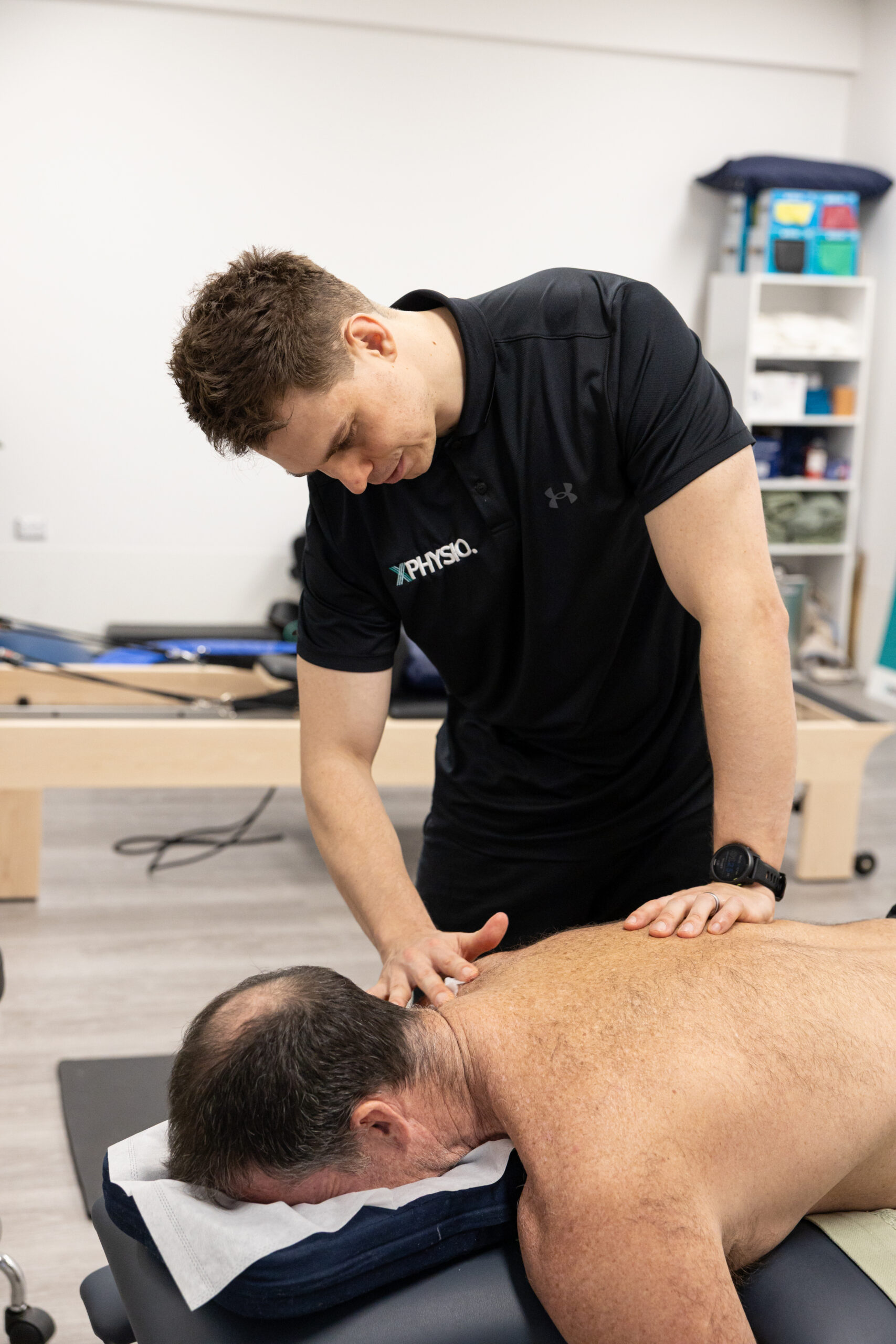
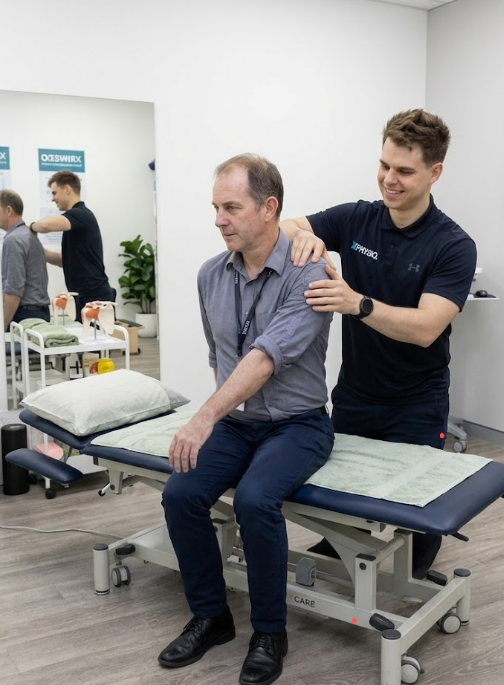
- Manual therapy (gentle joint mobilisation)
- Soft tissue release around the chest, shoulders, and upper back
- Advice on activity modification
2. Improving Thoracic Mobility
Stiffness in the upper back (thoracic spine) is a major contributor. If your upper back doesn’t move well, your ribs take on extra load.
We use:
- Mobility exercises
- Stretching techniques
- Hands-on mobilisation
3. Posture Correction
Poor posture is one of the biggest drivers of ongoing symptoms.
We help you:
- Improve sitting and standing posture
- Set up your workstation properly
- Build awareness of daily habits
4. Strengthening Exercises
Weakness in the upper back and shoulder muscles can overload the chest.
Your program may include:
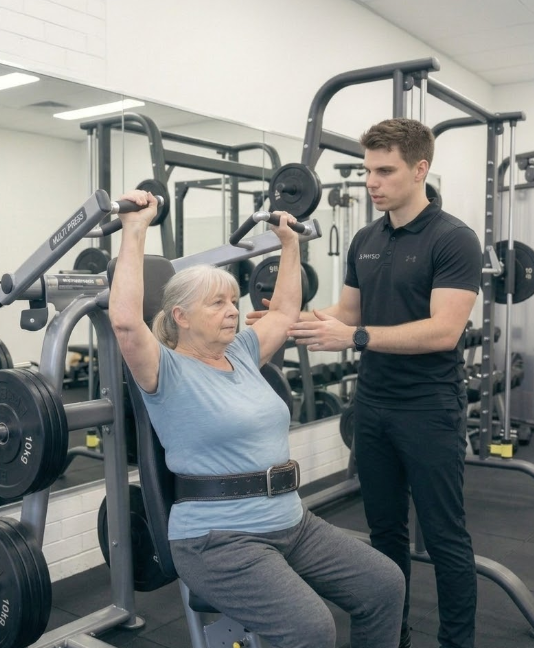
- Scapular stability exercises
- Postural strengthening
- Gradual return-to-loading programs
5. Breathing Retraining
Many people with costochondritis develop shallow or protective breathing patterns.
We guide you through:
- Diaphragmatic breathing
- Rib expansion exercises
- Relaxation strategies

Real Patient Example from Our Clinic
We recently treated a 34-year-old patient who travelled from Dee Why to our clinic in Frenchs Forest, NSW with persistent chest pain.
They had been to the GP and emergency department—thankfully, all cardiac causes were ruled out. However, the pain lingered for over 6 weeks and was affecting sleep, work, and gym training.
On assessment, we found:
- Significant stiffness through the thoracic spine
- Poor posture from long hours at a desk
- Pain reproduced with rib palpation and rotation
We started a structured costochondritis physiotherapy program including:
- Manual therapy to the rib joints and upper back
- Thoracic mobility exercises
- Postural correction strategies
- Gradual return to gym-based loading
Within 2 weeks, their pain had reduced significantly. By week 5, they were back to full training with no symptoms.
How Long Does Costochondritis Take to Heal?
Recovery time varies depending on the severity and how long it’s been present.
- Mild cases: 2–4 weeks
- Moderate cases: 4–8 weeks
- Persistent cases: 2–3+ months
With guided costochondritis physiotherapy, most people recover faster and reduce the risk of recurrence.
What Makes Costochondritis Worse?
If you’re dealing with this condition, try to avoid:
- Heavy lifting (especially pressing movements like bench press)
- Slouched sitting for long periods
- Sudden increases in training load
- Ignoring pain and pushing through
Small adjustments early can make a big difference.

Can You Still Exercise with Costochondritis?
Yes—but it needs to be modified.
We usually recommend:
- Lower body training
- Light cardio (walking, cycling)
- Avoiding aggravating upper body movements
A physio-guided plan ensures you stay active without delaying recovery.
When Should You See a Physio?
You should consider costochondritis physiotherapy if:
- Pain has lasted more than 1–2 weeks
- It’s affecting your daily activities or sleep
- You’re unsure what movements are safe
- Symptoms keep coming back
Early treatment often means faster recovery and less frustration.
Why Choose Physiotherapy Over Rest Alone?
While rest can help settle symptoms temporarily, it doesn’t address the root cause.
Physiotherapy focuses on:
- Fixing movement dysfunction
- Improving strength and posture
- Preventing recurrence
That’s why it’s the most effective long-term solution.
FAQs About Costochondritis Physiotherapy
What is the fastest way to recover from costochondritis?
The fastest way is a combination of relative rest, avoiding aggravating movements, and starting targeted physiotherapy early to improve mobility, posture, and strength.
Can physio fix costochondritis?
Yes. Physiotherapy is one of the most effective treatments, as it addresses the underlying mechanical causes rather than just masking symptoms.
Is costochondritis serious?
It’s not dangerous, but it can be painful and distressing. Always rule out heart-related causes first before confirming the diagnosis.
Should I stretch or rest with costochondritis?
Both are important. Rest initially, but guided stretching and mobility exercises are essential for recovery.
Can poor posture cause costochondritis?
Yes—poor posture places increased stress on the rib joints and is a common contributing factor.
How do I know if my chest pain is costochondritis?
If the pain is reproducible with touch or movement and worsens with certain activities, it may be costochondritis—but always get it checked by a medical professional first.
References
- https://www.healthdirect.gov.au/costochondritis
- https://www.physio-pedia.com/Costochondritis
- https://www.mayoclinic.org/diseases-conditions/costochondritis
- https://www.arthritis.org/diseases/costochondritis
- https://www.ncbi.nlm.nih.gov/books/NBK532931/
Chest pain doesn’t have to mean the worst—but it does deserve the right attention. If you’re dealing with ongoing rib or chest discomfort, a targeted costochondritis physiotherapy plan can make all the difference.
Give us a call today on 9806 3077, or book online, just CLICK HERE:
https://x-physio.au4.cliniko.com/bookings#service