
107) Wry Neck (Acute Torticollis): What to Do When You Wake Up Unable to Turn Your Head
Woken up and suddenly can’t turn your head? You’ve likely developed a wry neck (acute torticollis). It’s painful, stiff, and frustrating — but the good news is it’s usually very treatable. In this blog, we’ll explain exactly what causes it, what to do immediately, and how physiotherapy can speed up your recovery.
Woke Up Crooked? You’re Not Alone.
There’s nothing quite like that moment.
You roll over in bed… and realise your neck won’t move. One side feels locked. Turning your head sends a sharp jolt of pain. You’re stuck looking slightly sideways like you’ve permanently spotted something interesting.
This is wry neck, also known as acute torticollis — a common condition we see regularly in clinic.
The good news?
It’s rarely serious.
And with the right wry neck treatment, most people improve quickly.
Let’s break it down.

What Is Wry Neck (Acute Torticollis)?
Wry neck is a sudden onset neck spasm that causes your head to tilt or rotate to one side. The medical term is acute torticollis.
It usually:
- Appears suddenly (often overnight)
- Causes sharp pain on one side of the neck
- Limits rotation (you can’t turn your head properly)
- Feels “locked” or stuck
The muscles most commonly involved include:
- Upper trapezius
- Levator scapulae
- Sternocleidomastoid
- Deep cervical muscles
When these muscles go into protective spasm, movement becomes painful and restricted.
What Causes Wry Neck?
Most cases happen for simple mechanical reasons. Common triggers include:
1. Sleeping Position
Awkward pillow height or sleeping twisted can irritate joints and soft tissues.
2. Sudden Movement
Quick head turn, sport, gym movement, or even reversing the car.
3. Joint Irritation
Minor facet joint irritation in the cervical spine can trigger reflex muscle spasm.
4. Stress & Tension
High stress can increase muscle tone in the neck and shoulders.
5. Prolonged Posture
Long hours at a desk, laptop, or phone can overload neck structures.
It’s often a combination of factors rather than one clear cause.

What’s Actually Happening in Your Neck?
In simple terms:
- A small joint or structure becomes irritated.
- The nervous system reacts.
- Muscles tighten to protect the area.
- Movement becomes restricted and painful.
The muscle spasm isn’t the primary problem — it’s your body’s protective response.
That’s why simply stretching aggressively often makes it worse.
What To Do Immediately (First 24–48 Hours)
If you wake up with a wry neck, here’s what we recommend.
✅ Keep Moving (Gently)
Avoid forcing movement, but don’t completely immobilise it either. Small pain-free movements help calm the nervous system.
✅ Use Heat
A warm pack for 10–15 minutes can relax muscle spasm.
✅ Simple Pain Relief
Paracetamol or anti-inflammatories (if safe for you) may help.
❌ Avoid Aggressive Stretching
Cranking your head into the painful direction can flare it.
❌ Avoid Complete Rest
Staying still all day stiffens it further.
If it’s not improving within 48–72 hours — or if pain is severe — physiotherapy helps significantly.

When Should You See a Physio?
Seek assessment if:
- Pain is severe
- You can’t rotate your head at all
- It’s not improving after 2–3 days
- You get pins and needles or arm symptoms
- It keeps recurring
Most cases are mechanical and straightforward — but proper assessment ensures nothing more serious is going on.
How Physiotherapy Helps Wry Neck Treatment
This is where we see the biggest improvements.
Effective wry neck treatment isn’t just massage. It’s targeted, specific care.
1. Accurate Diagnosis
We assess:
- Cervical joint mobility
- Muscle tone
- Neural involvement
- Postural drivers
- Contributing factors
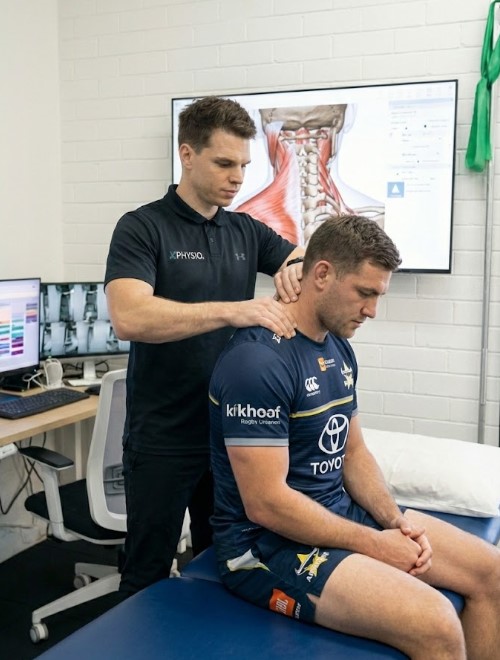
2. Gentle Joint Mobilisation
Specific hands-on techniques reduce joint irritation and reset movement.
3. Muscle Release
Targeted soft tissue work reduces protective spasm.
4. Movement Retraining
We guide safe movement patterns to restore normal range.
5. Education
Understanding what’s happening reduces fear and muscle guarding.
A Recent Case From Our Clinic
Just last month, we saw a 42-year-old patient who drove from Roseville to our clinic in Frenchs Forest NSW after waking up unable to turn her head.
She’d slept awkwardly after a long week at work. By morning, her head was stuck rotated to the right. Pain was sharp and she couldn’t check her blind spot while driving.
Assessment showed:
- Acute facet joint irritation
- Significant levator scapulae spasm
- No nerve involvement
We performed:
- Gentle cervical joint mobilisation
- Soft tissue release
- Guided active movement exercises
- Postural advice for her workstation
Within the first session, rotation improved by about 50%.
By her second visit 4 days later, she had near full movement.
One week later, she was back at Pilates pain-free.
This is typical when treatment is early and targeted.
How Long Does Wry Neck Last?
Without treatment:
- Mild cases: 3–7 days
- Moderate cases: 1–2 weeks
With physiotherapy:
- Often significantly reduced
- Faster return to full movement
- Lower chance of recurrence
The key is calming irritation early and restoring normal movement quickly.
Can Wry Neck Become Chronic?
Occasionally, yes — especially if:
- It’s left untreated
- Poor posture persists
- There’s repeated strain
- Underlying cervical stiffness exists
Recurrent episodes usually indicate an underlying mobility or control issue.
That’s where a tailored strengthening program matters.
Exercises for Wry Neck (Once Pain Settles)
These are general examples — individual assessment is best.
1. Gentle Rotation
Turn head slowly toward comfortable range.
10 reps, 3–4 times daily.
2. Chin Tucks
Gently retract chin (like making a double chin).
Hold 5 seconds, repeat 10 times.
3. Scapular Setting
Draw shoulder blades gently back and down.
These help restore control and reduce recurrence risk.

Prevention Tips
To reduce future episodes:
- Optimise pillow height (neutral alignment)
- Avoid stomach sleeping
- Improve desk ergonomics
- Take movement breaks every 30–45 mins
- Strengthen deep neck flexors
- Manage stress load
Small changes make a big difference.
Red Flags (Rare but Important)
Seek urgent medical review if you experience:
- Fever
- Severe headache
- Trauma
- Neurological symptoms
- Unexplained weight loss
- History of cancer
These are uncommon but important to rule out.
Why Early Wry Neck Treatment Matters
The longer muscle spasm persists, the more the nervous system sensitises.
Early physiotherapy:
- Reduces pain faster
- Restores movement sooner
- Prevents compensation patterns
- Lowers recurrence risk
Don’t wait it out unnecessarily.
Frequently Asked Questions (FAQs)
What is the fastest way to fix a wry neck?
Gentle movement, heat, and physiotherapy treatment provide the fastest improvement. Hands-on mobilisation combined with guided exercises usually speeds recovery significantly.
Should I massage a wry neck?
Light massage may help, but aggressive pressure can worsen irritation. It’s best combined with joint mobilisation and movement therapy.
Is wry neck serious?
In most cases, no. It’s usually a temporary mechanical issue. However, if symptoms are severe or accompanied by neurological signs, seek assessment.
Can I exercise with a wry neck?
Avoid intense workouts initially. Gentle movement is beneficial, but heavy lifting or high-impact activity should wait until pain settles.
How many physio sessions do I need?
Many patients improve within 1–3 sessions depending on severity.
References
- https://www.healthdirect.gov.au/torticollis
- https://www.nhs.uk/conditions/torticollis/
- https://www.physio-pedia.com/Torticollis
- https://xphysio.com.au/blog/
If you’ve woken up stuck and sore — don’t just wait and hope.
Early, targeted wry neck treatment makes a huge difference.
Give us a call today on 9806 3077, or book online, just CLICK HERE:
https://x-physio.au4.cliniko.com/bookings#service